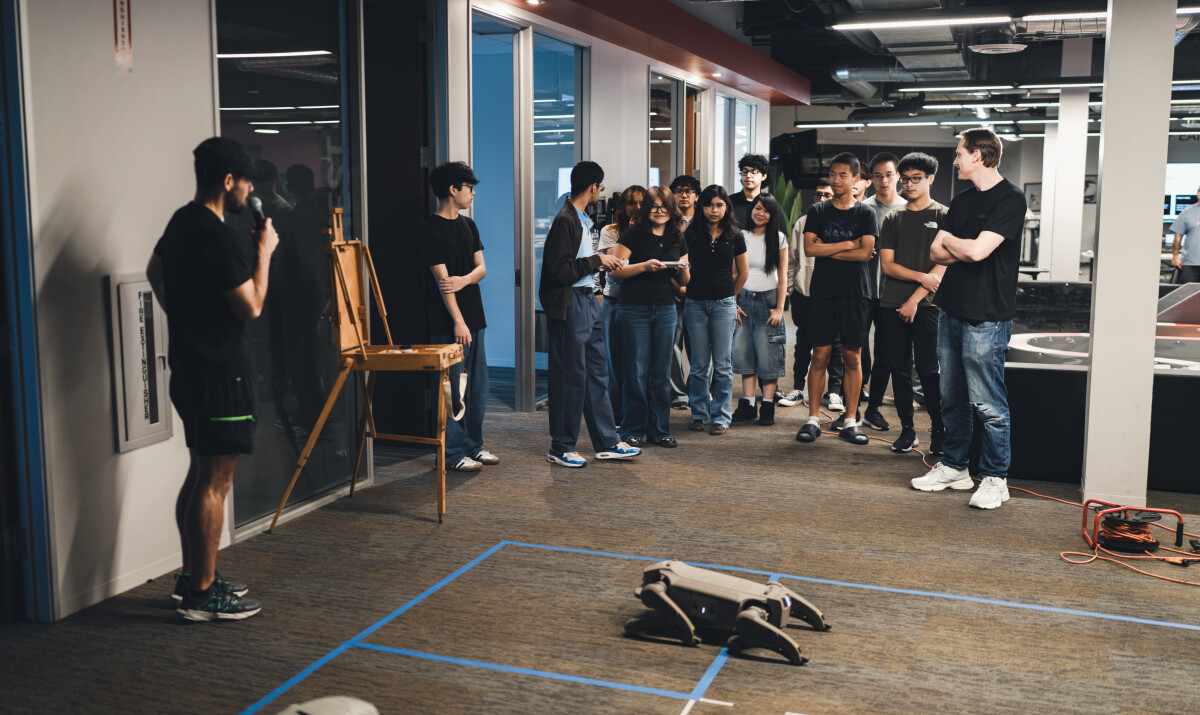
Your kid types the command.
The robot does it.
A robotics program built on the official 9-level FF EAI Education curriculum. All ages, no experience needed — the robots they learn on are the same ones FF sells to developers.
What happens in the first class?
No lectures about "the future of AI." Your child meets a robot, gives it an order, and watches it obey — in the first hour.
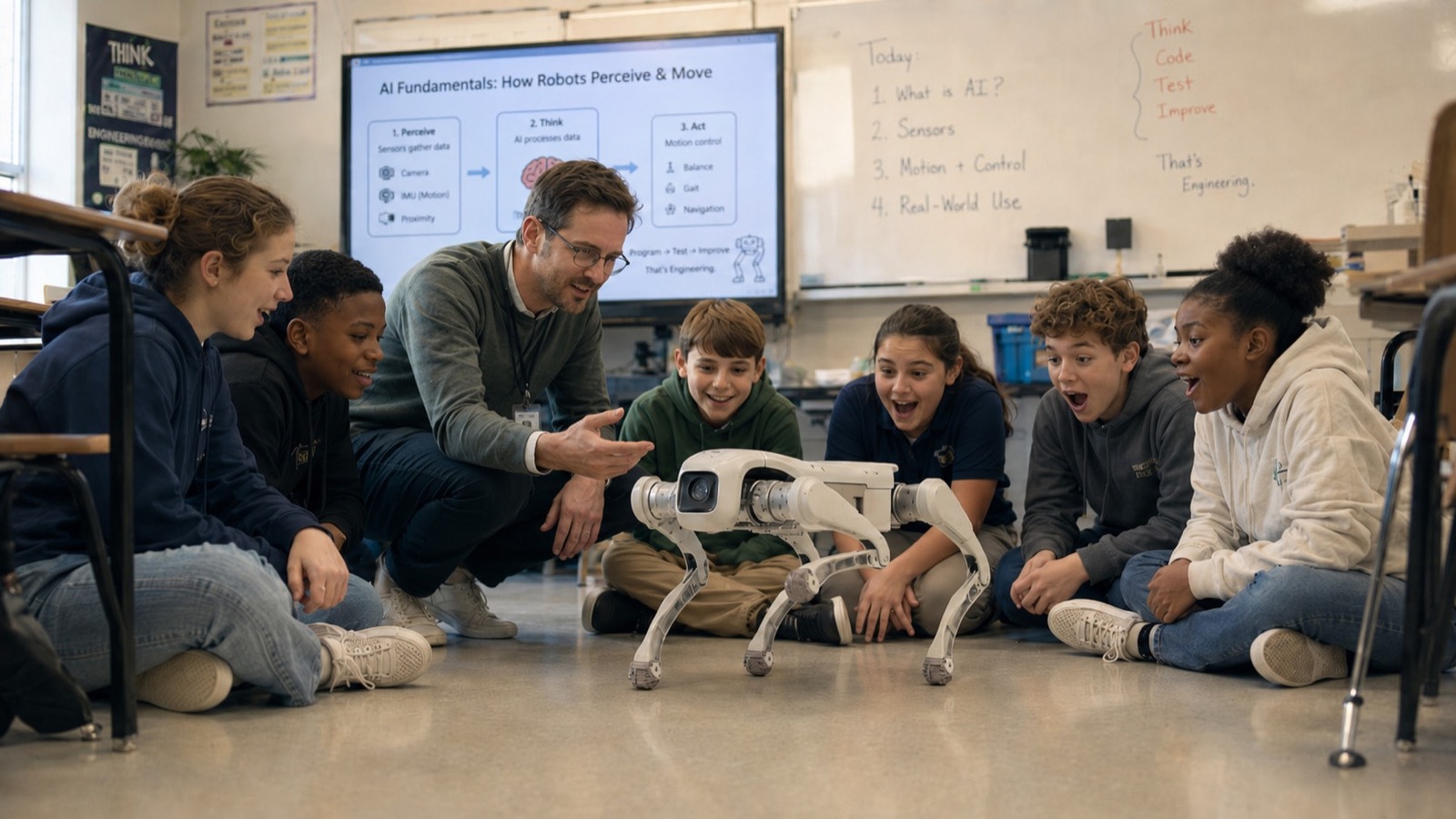
Meet Navi
An 8 kg robot dog with a camera and a microphone — it sees and it hears.
Photo: FF student class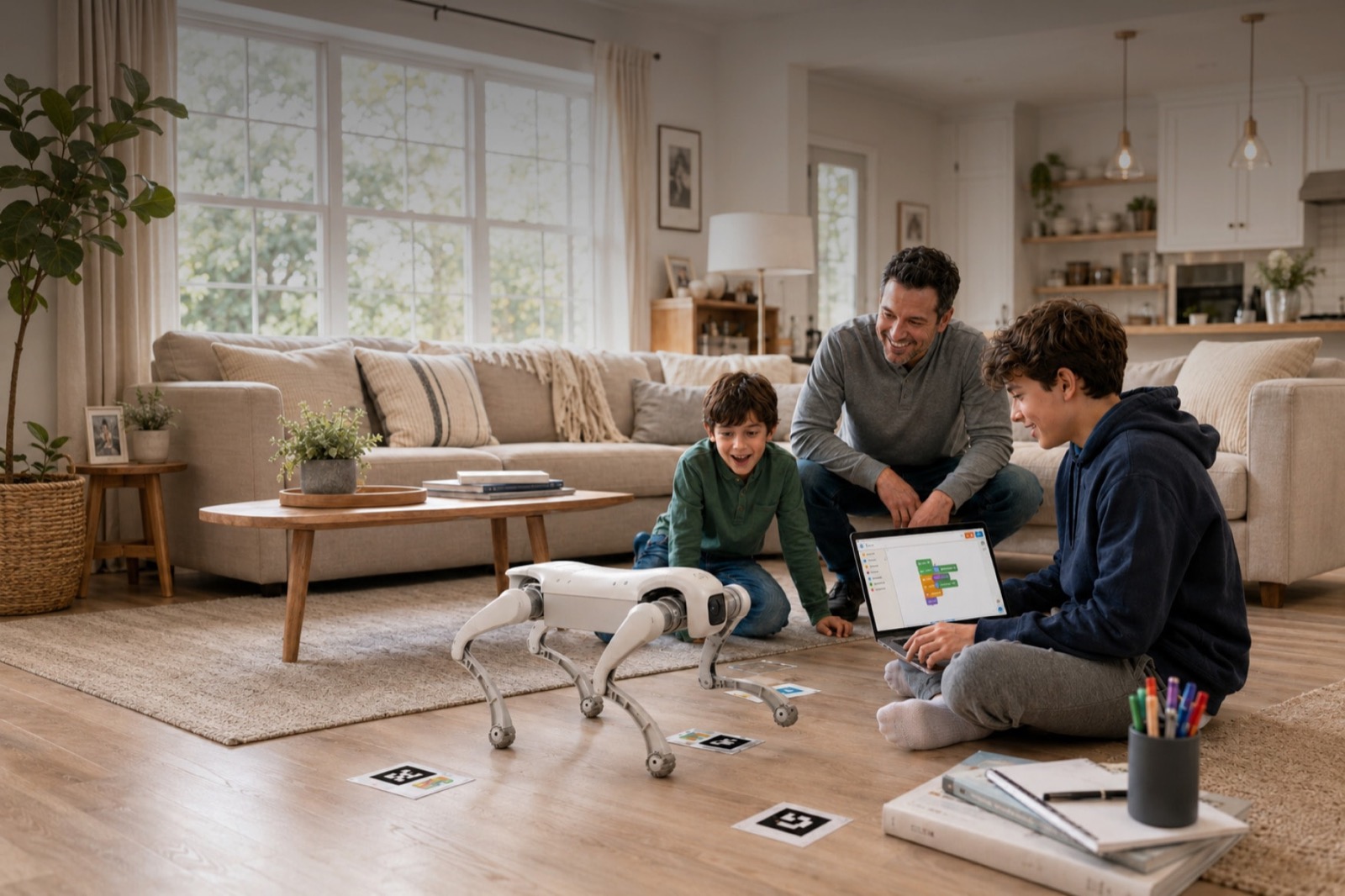
Drag three blocks
"Stand up", "walk forward", "nod" — snap them together like a puzzle and hit run.
The same toolchain carries all the way to Python — nothing to unlearn later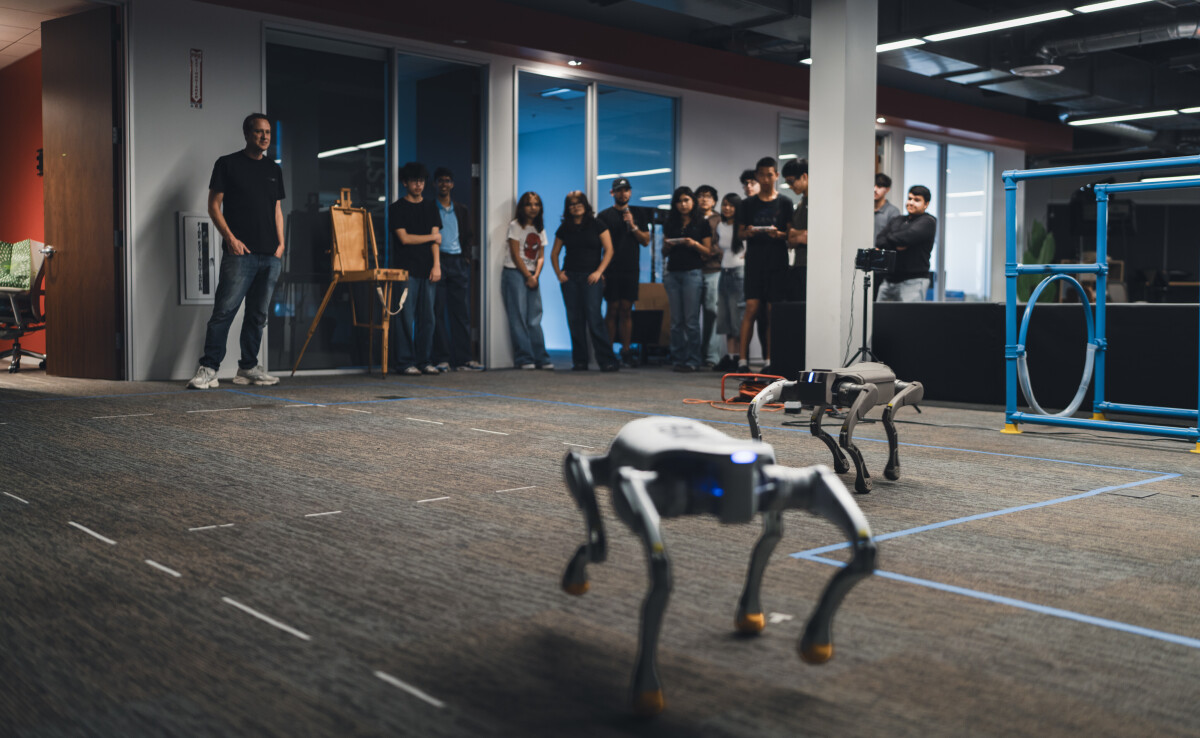
It obeys
The robot stands, walks over, and nods. That's the first program your child ever wrote.
Every class ends with something that worksWhat do they learn after that?
The full path is 9 levels — the official FF EAI Education curriculum. Each level ends with a skills check and a certificate, so you always know exactly where your child stands.
Make the robot listen
Command the robot dog with drag-and-drop blocks: walking, following, reacting, performing — and give it a voice and a personality.
Teach the robot skills
Real Python on the bigger Aegis: help assemble it, model parts, write gaits, and let it patrol and follow on its own.
Let the robot learn
Drive a humanoid with ROS 2, train AI in simulation first, then run it on the real machine — and write a short research paper at the end.
How is this different from a LEGO / VEX class?
LEGO and VEX are good teaching kits, and plenty of our students have done them. There's really only one difference, but it matters: these aren't teaching kits, they're robots that are actually for sale.
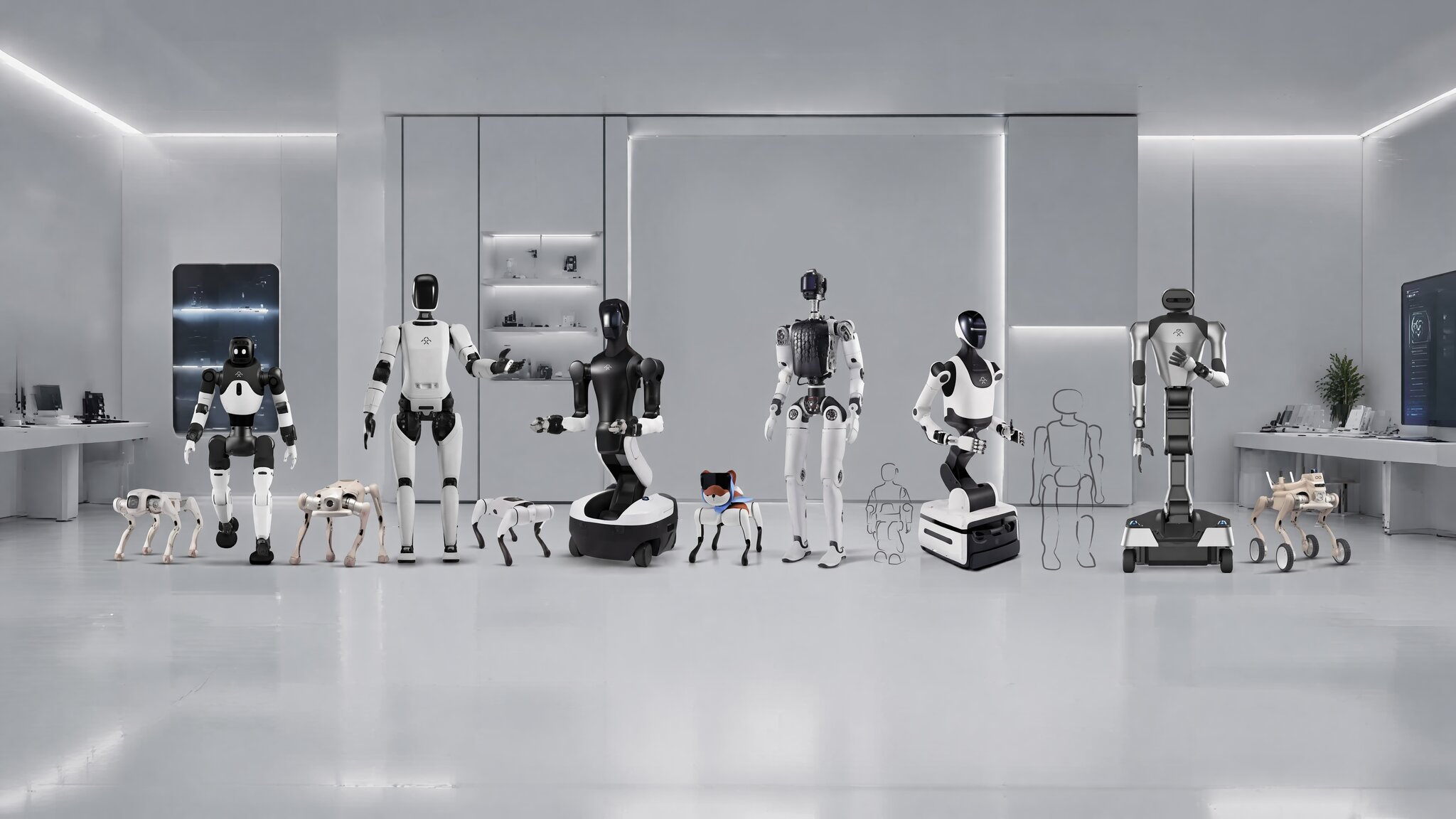 The robots students actually use — from quadrupeds to full-size humanoids (FF robotics lab)
Robots people actually buy
The robot dog in class is the same FX Navi that Faraday Future sells to developers — and there are higher-end models beyond it.
They see, hear, and decide
Cameras, microphones and AI on board. Kids aren't just building a mechanism — they're teaching it to be smart.
Skills that don't end here
The Python and robotics software used in universities and companies — plus an FF developer account that still works after the course ends.
The same skills carry into competitions
The programming, sensing and debugging they practise in class is exactly what robotics competitions and science fairs ask for — and our academic team helps them pick an event, prepare for it and write the work up.
What does my child keep?
Three things you can actually see and keep — not just "it was a good experience."
LV 2
A certificate for every level
An official certificate for each of the 9 levels, plus an awards ceremony — the way FF has always done it at its own camps.
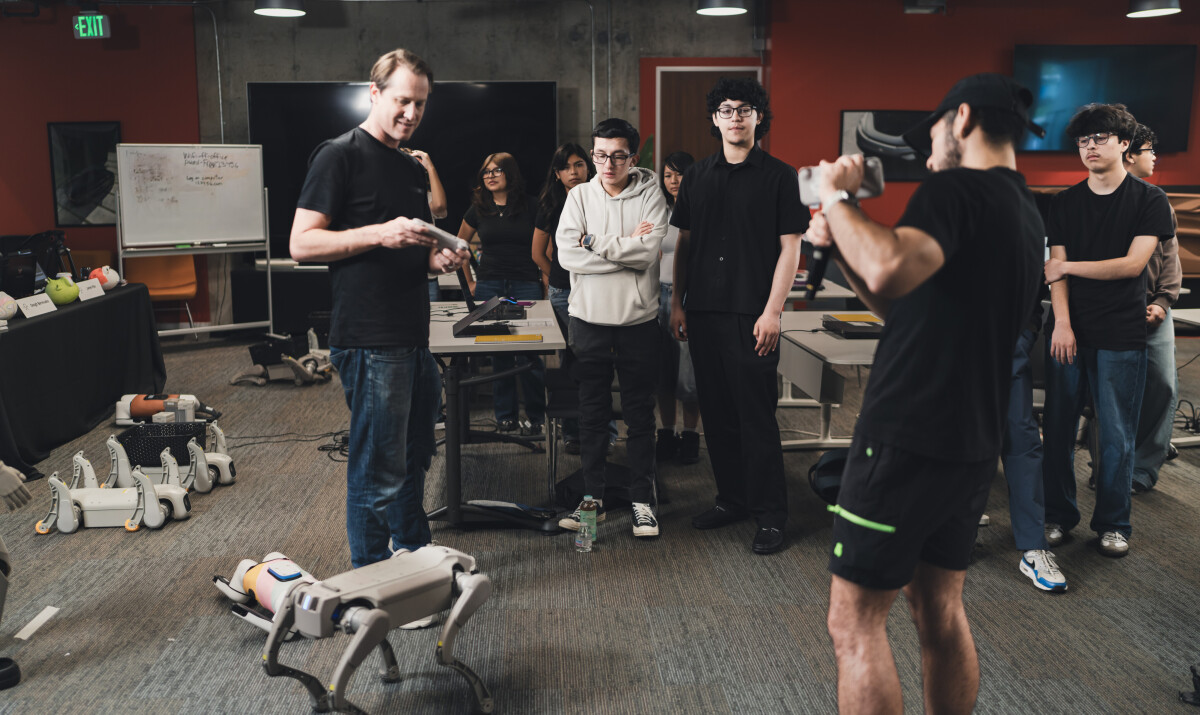 Photo: student showcase at FF
A project they can explain themselves
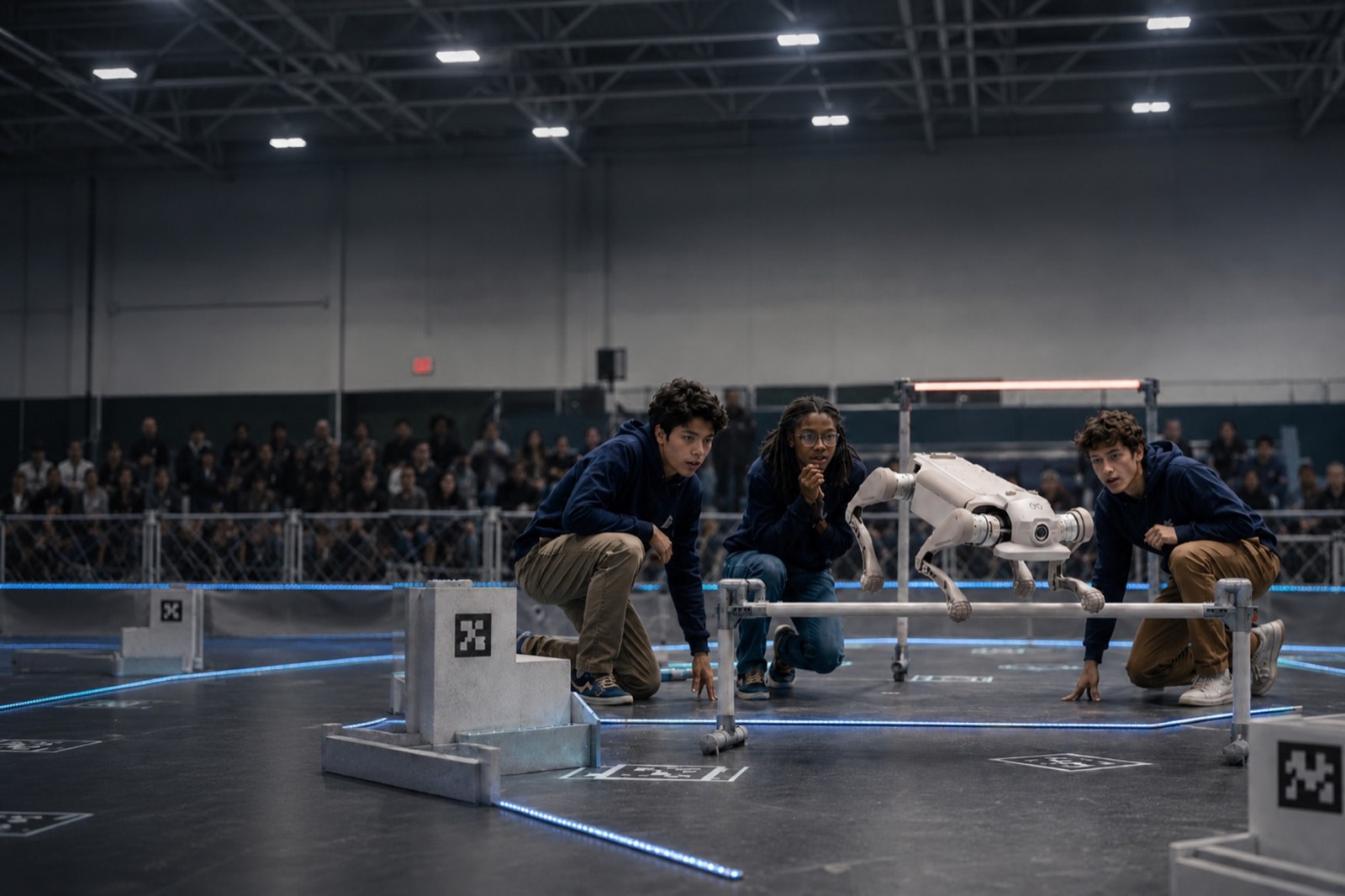
Every stage ends with something that runs — say a robot dog that patrols, stops for obstacles and barks when someone comes close — demoed live for families at the showcase.
A developer account that stays
An official FF young-developer account: courses, projects, and a Skill Store where kids publish work for a global community — it keeps working after class ends.
For college-minded families: EduReady's admissions team (5,000+ successful applications) turns each project into material you can actually use — science fairs, robotics competitions, and later on, college applications.
Where does my kid start?
Two entry points — one for middle school, one for high school. Same levels, different pace and depth. Which level they start at, and what it costs in total, is written out for you on the free consult.
Foundations on Navi
Blocks and basic motions first, then sensors, logic and gaits, teaching the robot dog to stop for obstacles on its own → finishing with a guard / delivery / performing / training dog, demoed at the showcase.
Same foundations, faster and deeper
The same levels at a faster pace, plus Python and data analysis; the final project needs data and a one-page write-up — the kind that belongs in a portfolio.
Where to start, and what it costs.
A quick chat about your child's grade and experience — you'll leave with which level to start at and full pricing in writing.
- The middle-school entry point, or the high-school one?
- Full pricing, no hidden fees
Who teaches? Is it safe?
The people teaching are engineers, not reading from a script — and the first thing in every cohort is safety.
Program Director
10+ years in education, 5,000+ families served.
Lead Instructor
Engineering background, trained on FF's teacher resources and developer platform.
FF Ecosystem Support
Curriculum, hardware and platform supported directly by FF's education-partner program.
My child has zero experience. Really OK?
Is my kid too old / too young for this?
Do you do competitions?
Can we visit FF's actual lab?
See the other programs.
Start with a free consult.
No commitment.
Scan the QR, email or call — whichever you prefer. We listen to where your child is, suggest a good starting point, and write out full pricing for you.